● Dorset COP
Seeing the system, together
At Dorset COP 2024 and 2025, we helped design and deliver a more participatory, community-led approach to the event.
Our role focused on engagement, communications, and creating tools that helped people see, understand and connect the wider system they are part of.
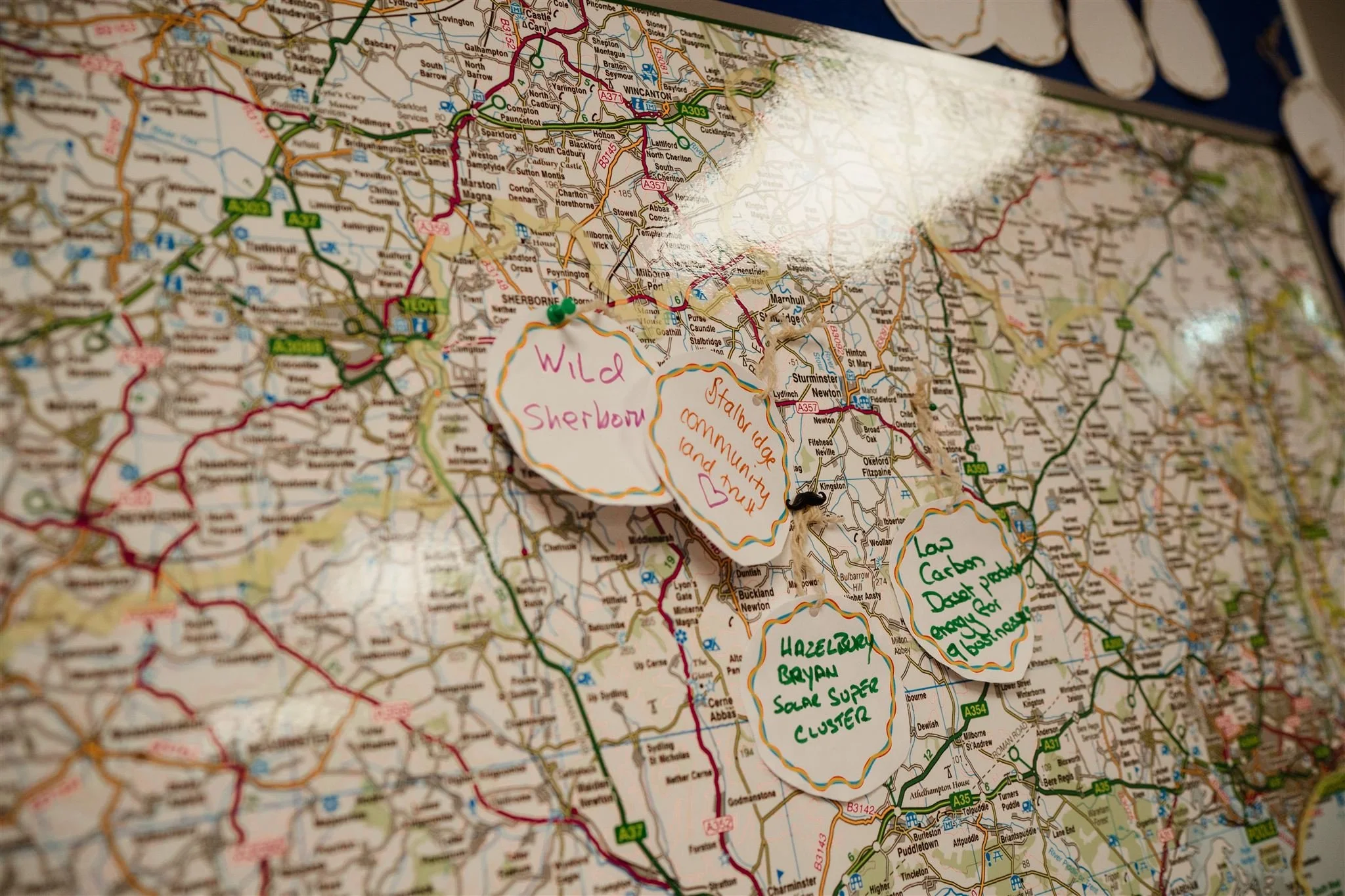
One of the most powerful of these was a large, physical, live map of Dorset.
-
We created a giant, interactive map where anyone could pin their work, trace relationships, and explore what was happening across the county.
It became a shared space for people to:
see the scale of activity across Dorset
spot clusters of energy and gaps
discover nearby projects they didn’t know existed
connect across towns, rivers and themes
start conversations about collaboration, funding and shared challenges
Across two years, the mapping helped around 100 people find a local group, and over 200 people left with a clearer sense of what was happening near them.
For funders and organisers, it revealed work that was previously invisible.
-
The map made something very clear:
Dorset is not short of action. It is short of connection.
Across the county, there is already:
strong place-based climate and community groups
growing work around food, land and wellbeing
active repair, reuse and circular economy initiatives
emerging community ownership and stewardship projects
But much of this work is:
fragmented
under-recognised
happening in isolation
People repeatedly said:
“We’ve been doing this alone for years.”
-
Alongside what was visible, the map also showed what isn’t yet fully there:
very little youth-led work or clear pathways for young people
limited connection between climate and social justice
few visible routes into green jobs, training or livelihoods
weak connection to mainstream farming and land use
county-wide networks that exist, but aren’t widely felt or accessed
This wasn’t a lack of care or effort.
It was a lack of shared infrastructure.
-
The mapping didn’t just visualise projects.
It changed how people saw their role within a wider system.People began to:
recognise themselves as part of something bigger
identify where collaboration could happen
understand where support and resource was needed
see patterns that aren’t visible when working alone
It turned a room full of individuals into something closer to a network.
-
As part of the Dorset COP steering group, This Living Place supported a shift away from a traditional conference format towards something more participatory and relational.
We:
designed and delivered the mapping process
supported engagement and outreach
helped shape a more open, community-led event structure
created space for peer exchange, co-design and collaboration
The result was a 50% increase in attendance (300+ people) and a stronger sense of shared momentum across the county.
-
What emerged from this work is clear.
Dorset doesn’t just need more projects.
It needs:better visibility of what already exists
connective roles and “weavers”
shared tools and infrastructure
spaces for organisers to align and collaborate
new pathways for young people to lead
The opportunity now is to build on this foundation and move from mapping the system → to actively strengthening it.
-
Work like this often goes unseen.
The mapping, the convening, the connecting, the quiet work that helps things join up.
But without it, projects stay isolated, energy dissipates, and change struggles to take root.
This is the role we are continuing to develop through This Living Place.