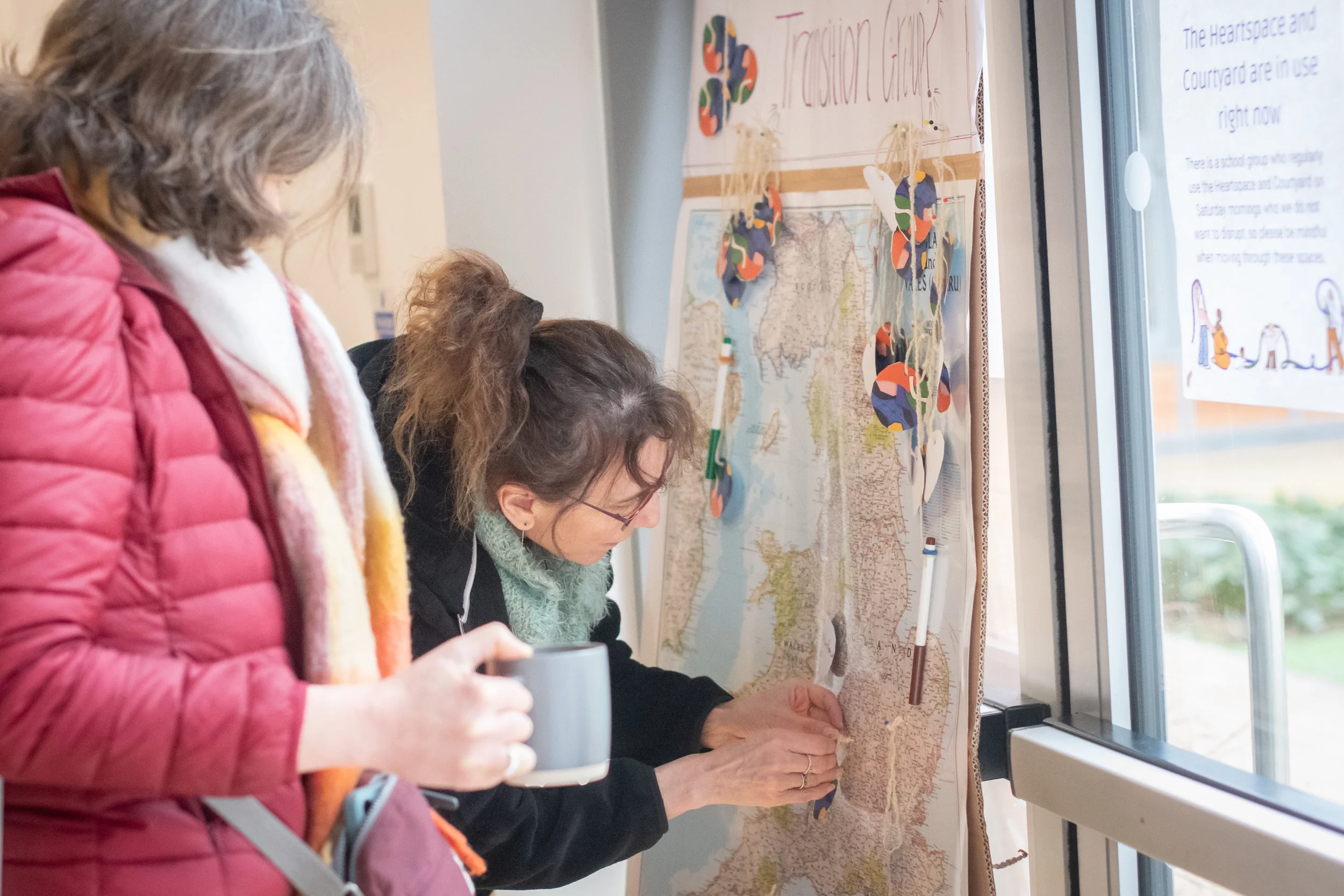
Photo credit Mouse About Town
● Network Weaving with Transition Together
Strengthening connections across a national movement
Between 2024 and 2025, we worked as part of the Transition Together Network Weaving team, supporting the Transition movement across the UK.
This role focused on something often overlooked but essential:
the relationships, connections and shared understanding that hold a movement together.
Working across the South West, we spent time with Transition groups in their places, listening, connecting and helping strengthen the wider network they are part of.
-
Network weaving is about strengthening the connections between people, projects and places so that knowledge, support and momentum can flow more easily.
Rather than creating new programmes, the work focuses on:
listening to what is already happening on the ground
building relationships between groups
surfacing patterns, challenges and opportunities
connecting local work into a wider movement
It is a form of relational infrastructure building at a national scale.
-
Over six months, we:
travelled across the South West meeting Transition groups in their places
connected with 50+ groups regionally, and contributed to conversations with over 125 groups nationally
held conversations to understand what groups were doing, what they needed, and what was emerging
built relationships between groups, projects and organisers
supported peer learning and exchange across the network
contributed to the design and delivery of the Transition Assembly, bringing together 150+ people from across the UK
helped capture and share learning through a national report and online platforms
This work created a regional and national picture of community-led change that is rarely visible.
-
Across the network, we saw an extraordinary depth of work already happening:
community food projects, repair cafés, energy initiatives and local enterprises
long-standing groups sustaining local action for over a decade
new projects emerging in response to climate, economic and social pressures
At the same time, clear patterns emerged:
many groups are deeply embedded but feel isolated
much of the work is held by a small number of people with limited resources
connection between groups is inconsistent but highly energising when it happens
where regional infrastructure exists, collaboration and resilience are stronger
-
This project reinforced something central to our work:
connection is not a ‘nice to have’, it is essential infrastructure.
Across the UK, thousands of people are already working to strengthen their communities and respond to the crises we face.
But without strong relationships, shared tools and ongoing support:
knowledge is lost
energy is fragmented
and change happens more slowly than it could
This work showed that when connection is prioritised:
confidence grows
collaboration increases
and the potential for systemic change expands
-
Relationship-building is critical, but consistently under-resourced
Regional networks play a key role in supporting local action
People need practical tools and shared infrastructure, not just ideas
Bringing people together, even briefly, can unlock significant momentum
National movements are only as strong as the connections between their local parts
Project Partners