
● Upcoming Training
Transforming Conflict As Community Practitioners
Are you finding yourself increasingly navigating conflict, division and polarisation in your community?
In the context of growing social fracture, we have developed Transforming Conflict As Community Practitioners, a four-month learning journey to support UK-based community facilitators, organisers and leaders to build the confidence, skills and peer support needed to navigate conflict in their communities constructively.
Drawing on practical tools, systems thinking, nonviolent communication and co-liberatory practice, participants will learn how to facilitate dialogue across difference, work through tension and conflict, and foster greater connection and resilience within their communities.
Starting September 2026
APPLICATIONS NOW CLOSED
Please email us or follow us on Instagram or Substack if you would like to hear about future trainings
Across our communities, we’re seeing rising polarisation, increasing distrust, burnout, conflict and fragmentation.
Many of us are trying to hold spaces, facilitate conversations and bring people together without ever having been taught how to work with power, conflict and difference.
At the same time, many of the forces driving division are systemic. Communities are often encouraged to blame one another rather than understand and address the conditions affecting them all.
What if we had the skills, confidence and support to respond differently?
This four-month learning journey is designed for community facilitators, organisers and leaders who want to strengthen their ability to navigate conflict, build trust and help communities move from division towards collective action.
-
Practical tools for working with conflict and tension
Greater confidence facilitating difficult conversations
A deeper understanding of power, oppression and polarisation
Skills for building trust across difference
A supportive peer community of fellow practitioners
Space for reflection, practice and experimentation
-
This learning journey is for people working in communities and places who are increasingly finding themselves holding conflict, navigating power dynamics and trying to bring people together in an increasingly polarised world.
You might be:
A community organiser
A facilitator
A climate or social justice practitioner
A community development worker
A local councillor
A volunteer coordinator
A place-based practitioner
Someone holding groups, networks or community spaces
Content & Structure
-
Before we can navigate conflict, we need to understand the paradigm we are operating from.
Together we’ll explore how to create spaces capable of holding difference, move beyond blame and othering, and reconnect with what matters most. We’ll look at how our nervous systems respond to challenge, how dominant patterns show up in groups, and how we avoid reproducing the very dynamics we hope to transform.
Themes include:
Moving from blame to connection
Creating spaces that can hold difference
Embodied awareness and nervous system regulation
Living systems thinking and interconnection
Recognising and interrupting harmful group dynamics
Applying these principles in your own community context
-
Every conversation, community and conflict exists within wider systems of power and belonging.
In this session we’ll explore how our experiences are shaped by the systems we inherit, how power operates in groups and communities, and what it means to work with power rather than over others.
Themes include:
Power, privilege and belonging
Understanding your location within wider systems
Speaking and listening across difference
Using power collaboratively
Moving from domination towards participation
Building relationships across different lived experiences
-
Conflict is often seen as something to avoid. What if it also contains information, feedback and opportunities for transformation?
Together we’ll explore practical approaches for working constructively with conflict, navigating difficult conversations and responding to harm without escalating division.
Themes include:
Understanding what conflict is telling us
Finding the gift and feedback within conflict
Speaking up and interrupting harm
De-escalation and regulation
Boundaries, empathy and consent
Navigating challenge without creating further polarisation
-
How do we facilitate change without taking over responsibility? How do we remain grounded in our values when tensions are high?
This final session explores how we cultivate practices that strengthen agency, connection and collective resilience.
Themes include:
Facilitating difficult moments
Working with competing needs and traumas
Supporting change without rescuing
Moving beyond righteousness and certainty
Sharing dilemmas rather than defending positions
Leading in alignment with the future we want to create
-
We’ll reflect on what we’ve learned, identify how it applies to our communities, and explore how we continue supporting one another beyond this learning journey.
Peer Practice Sessions
Between Learning Labs, you’ll be invited to meet with a small group of fellow participants to reflect on the learning, share experiences, and explore how the ideas are showing up in your own work and communities.
These informal peer sessions are optional, but offer a valuable opportunity to deepen relationships, practice together, and receive support from others navigating similar challenges.

Facilitator & Tutor
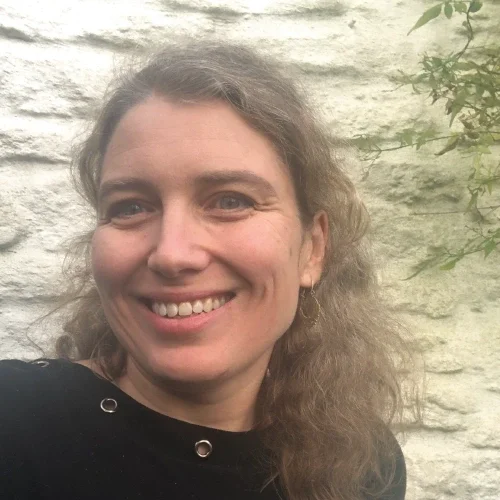
Sophie Docker is a facilitator, mediator, coach and trainer with over a decade of experience supporting individuals, communities and organisations to engage with conflict, power and difference in transformative ways.
Her work draws on Nonviolent Communication, Restorative Practice, Transformative Justice, relational neuroscience and systems thinking. She is a Certified Trainer with the Centre for Nonviolent Communication and has worked extensively with communities, organisations and social movements exploring how we move beyond polarisation, domination and violence towards connection, liberation and interdependence.
Sophie is particularly passionate about conflict as a driver for learning and change, helping people develop the skills, confidence and awareness needed to navigate difficult conversations and build healthier cultures.

Organisers

OpenEdge accompanies change-makers meeting moments of tension and difficulty with facilitation, coaching, consultancy and training using a coliberatory approach. They bring a systemic lens to conflict, navigating power dynamics to build more equitable, compassionate and collaborative cultures.
This Living Place is a community-led organisation exploring what it takes to restore community agency in a time of profound social, ecological and economic change. Through practical work in our rural home in the South West and peer learning across the UK, we create opportunities for people to learn, connect and act together.
Dates & Times
Sessions take place from 10:00am–12:30pm UK time via Zoom.
9 September
7 October
11 November
9 December
Commitment
This programme is designed as a learning journey, with each session building on the last. We therefore ask that participants commit to attending all four Learning Labs wherever possible.
Time commitment:
Four online Learning Labs (2.5 hours each with breaks)
Optional peer practice sessions between Learning Labs (approximately 1 hour per month)
Personal reflection and application in your own context
To get the most from this learning journey, we recommend setting aside around 3-4 hours per month.

Contribution
We believe these skills should be accessible to the people doing the work of building stronger communities.
To help make that possible, we offer places on a contribution scale. Please choose the level that best reflects your circumstances
Tier 1 (£150) - Supported
You are primarily self-funding and cost is a significant factor in your decision to attend.Tier 2 (£250) - Reduced
You are self-funding but have some discretionary income available, or you have limited access to organisational or project funding.Tier 3 (£350) - Standard (recommended)
You have access to organisational funding, a professional development budget, project funding, or sufficient personal income to comfortably cover the cost of your place.Tier 4 (£450) - Supporting Access
You have access to larger organisational budgets or greater personal financial flexibility and would like to help widen access for others.Tier 5 (£550) - Pay It Forward
You have substantial organisational resources available, or significant personal financial flexibility, and would like to make a meaningful contribution towards bursary and supported places.Bursary
For those who would otherwise be unable to attend.
The cost of delivering this programme is approximately £5,600. There will be 16 places, so if we filled it and split the cost equally, it would be £350 per place. And we would like to acknowledge that we are not all joining with the same access to resources, and we would like to take an equitable approach to covering the costs.
So if you can do so comfortably, please contribute more than this, so we can cover the places of those with less access to resources and share in the responsibility of removing some of the financial barriers to participating. We are committed to creating a diverse cohort that reflects the range of people doing community-led work across the UK.
Application process
We are inviting people to apply rather than booking places instantly.
This helps us understand who is interested, build a cohort that will benefit from the learning journey, and ensure the programme is a good fit for those taking part.
There are only 16 places available, and we expect demand to exceed capacity, so we encourage you to apply as early as possible.
Applications will be reviewed in batches on:
• 30 June
• 31 July
• 21 August (final application deadline)
You will hear from us within five working days of the relevant review date. Successful applicants will then be invited to confirm their place through payment.
If the programme reaches capacity before the final deadline, we may close applications early or operate a waiting list.
APPLICATIONS NOW CLOSED
Please email us or follow us on Instagram or Substack if you would like to hear about future trainings
Questions
We know joining a four-month learning journey is a significant commitment, and you may have questions before applying.
Emma (emma@thislivingplace.co.uk) and Sophie (sophiedocker@gmail.com) are available to answer questions, talk through the programme, or arrange a short Zoom conversation if you’d like to explore whether it’s the right fit for you.
If you have questions specifically about logistics, please contact Emma. For questions about the learning journey and content please contact Sophie.
If you’re excited by the programme but unable to join this cohort due to timing, cost, accessibility needs or other commitments, please let us know, using the emails above.
We are keen to understand demand and explore how future versions of this learning journey can reach more people.
-
We understand that circumstances can change, and if you need to withdraw from the course, we ask that you let us know as early as possible. Because places are limited, early notice helps us offer opportunities to people on the waiting list and supports the sustainability of this work.
Cancellations made more than 21 days before the course start date will receive a full refund, minus any booking or administration fees.
Cancellations made between 7 and 21 days before the course start date will receive a 50% refund.
Unfortunately, we are not usually able to offer refunds for cancellations made within 7 days of the course starting, or after the course has begun.
In exceptional circumstances we may be able to transfer your place to someone on the waiting list (if there is one)
If during the course, difficult or unexpected circumstances arise, please get in touch and we will do our best to respond with care and flexibility where we can.
-
Because this is a cohort-based programme built on trust, shared learning, and peer support, we’re asking participants to join with the intention of being present for the majority of sessions.
We understand that life happens, and recordings/resources will be available where needed, but this offer is designed around active participation rather than passive catch-up.
The more present you are, the more valuable the experience will be, both for you and for the wider group.
-
Time commitment:
Four online Learning Labs (2.5 hours each with breaks)
Optional peer practice sessions between Learning Labs (approximately 1 hour per month)
Personal reflection and application in your own context
To get the most from the programme, we recommend setting aside around 3-4 hours per month.
-
We are actively seeking funding to offer a small number of fully-funded places for those who would otherwise be unable to participate. Please mark this on the application form if you need a bursary or contact emma@thislivingplace.co.uk
-
Yes this is a possibility, please contact emma@thislivingplace.co.uk to have a chat about this.
-
No, we do not offer certification. However, Sophie is a Certified Trainer with the Centre for Nonviolent Communication. Please reach out to sophiedocker@gmail.com if you are interested in completing further training.
-
Please contact emma@thislivingplace.co.uk to have a chat about this.
-
Sophie Docker from Open Edge will be teaching and facilitating this course.
Sophie is a facilitator, mediator, coach and trainer with over a decade of experience supporting individuals, communities and organisations to engage with conflict, power and difference in transformative ways.
Her work draws on Nonviolent Communication, Restorative Practice, Transformative Justice, relational neuroscience and systems thinking. She is a Certified Trainer with the Centre for Nonviolent Communication and has worked extensively with communities, organisations and social movements exploring how we move beyond polarisation, domination and violence towards connection, liberation and interdependence.
Please email sophiedocker@gmail.comif you have any specific questions about the course or would like to have a short Zoom conversation.
-
The learning journey beginning in September 2026 is designed for people based in the UK and is rooted in the UK's social and political context.
We've had interest from many people outside the UK and would love to offer an international version at a later date if there is sufficient demand. If you'd like to register your interest for this, please contact emma@thislivingplace.co.uk.